















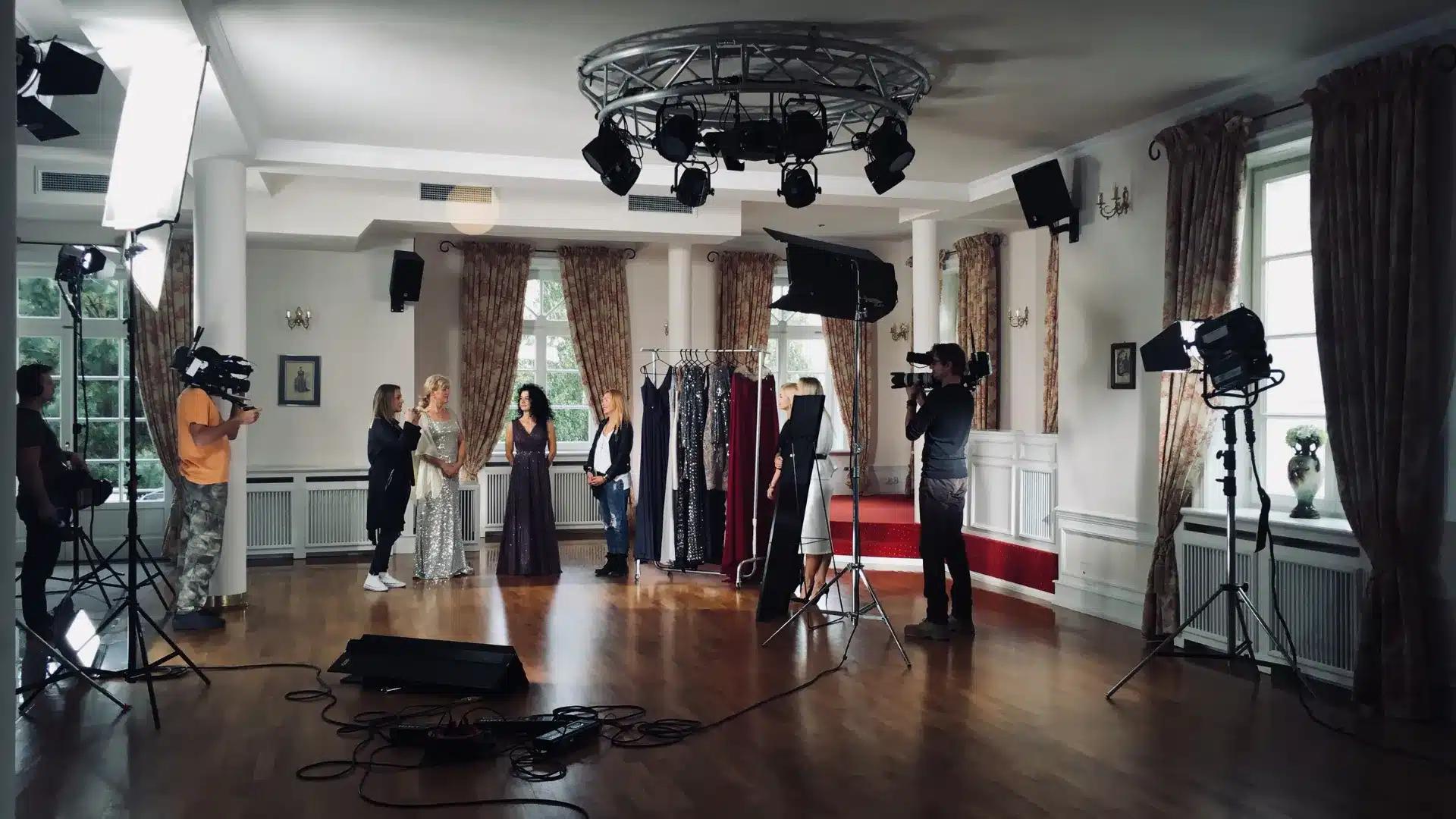

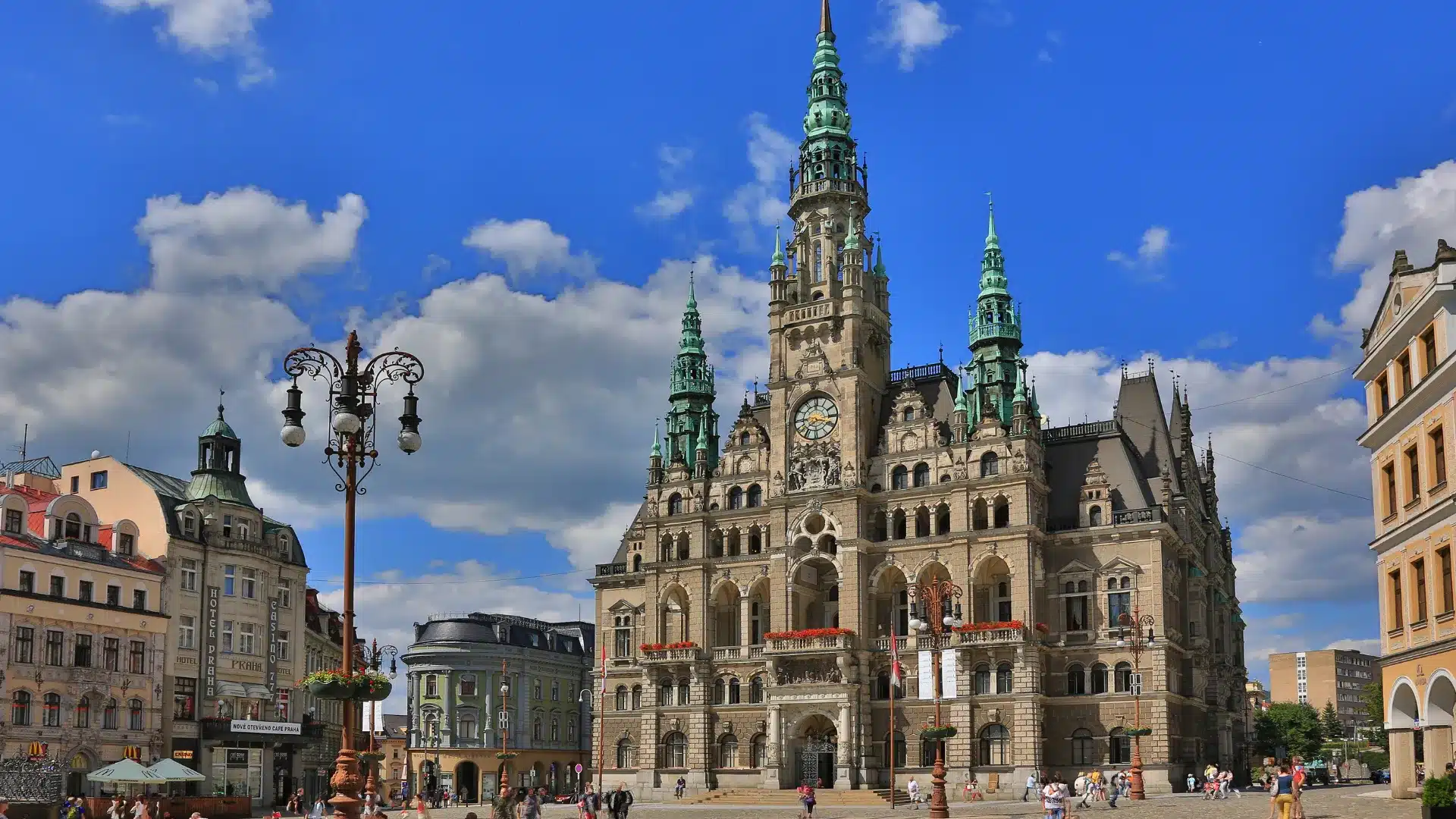
North Macedonia does something few European destinations manage: it puts a genuinely wide range of looks inside a two-hour drive. Skopje’s collision of Ottoman bazaar, brutalist blocks and monumental new architecture. Ohrid’s lakefront and Byzantine churches. Bitola’s neoclassical boulevards. Mavrovo’s mountains, Matka’s canyon, Prespa’s lake, Kratovo’s stone towers, and Roman ruins at Stobi and Heraclea. All of it supported by experienced local crew, a competitive cost base and a national cash rebate.
Hoodlum provides Film Production Services in North Macedonia for commercials, documentaries, factual entertainment, travel campaigns, branded content, feature films and international co-productions across Skopje, Ohrid, Bitola, Mavrovo National Park, Matka Canyon, Lake Prespa, Kratovo, Prilep and the mountain village regions. Our team handles Film Agency liaison, municipal and heritage permits, protected-area access, visa and work compliance support, ATA Carnet customs planning, Civil Aviation Agency drone approvals, local fixers, location scouting, crew sourcing and full on-ground production management. You can see the wider scope of what we do and the team behind it on our who we are page.
North Macedonia is not part of the Schengen Area, which gives productions a separate visa and entry framework from EU Schengen countries. The country is film-friendly, but permissions still need handling properly. Film permits, location approvals, drone permissions, equipment customs clearance, private location agreements, insurance and rebate documentation all belong in prep rather than on the ground.
Why North Macedonia Works for Range, Cost and Compactness
The defining advantage is scale — or rather the lack of it. Almost every location in the country is within two hours of Skopje. A production can shoot a capital city interior in the morning, a lake town in the afternoon and a mountain road the following day without an internal flight, a second unit base or a hotel move that eats half a day. That compression shows up in the schedule and the budget before any rebate is applied.
The second advantage is contrast within that small footprint. Skopje alone offers Ottoman-era bazaar streets, Yugoslav-era brutalism, the monumental neoclassical building programme of the 2010s, riverfront and bridges, markets and residential districts, with mountains visible from the city. Few capitals of any size give a production that many distinct registers within walking distance.
The third is cost. Local crew rates, accommodation, transport and location fees sit well below Western European levels, and the country’s proximity to major European production centres means specialist crew can be brought in easily where the local pool is thin.
North Macedonia is especially well suited to:
- Commercials and branded content
- Documentary and factual television
- Travel and cultural programming
- Feature films and television drama
- International co-productions
- Period and historical projects
- Mountain, lake and road-based filming
- Small to medium international crews
Filming in Skopje
Skopje is the production base and one of the more visually layered capitals in Europe, largely because its architectural history is unusually legible. The 1963 earthquake destroyed much of the old city, the rebuild produced significant Yugoslav modernist and brutalist work, and the Skopje 2014 programme layered monumental neoclassical buildings and statuary over the centre. The Ottoman-era Old Bazaar survived and remains one of the largest in the Balkans.
Useful Skopje looks include the Old Bazaar’s streets and workshops, the Stone Bridge and riverfront, brutalist landmarks including the post office and the university complex, the monumental squares and statuary, markets and street life, residential districts, government and commercial zones, and rooftop and city viewpoints with Vodno rising behind.
Planning issues are traffic, parking, loading, public filming permissions, crowd control and coordination around government or sensitive buildings. Vodno and the Millennium Cross give elevated city views without a drone, and Matka Canyon is forty minutes out — a gorge with a reservoir, caves and monasteries that reads as far more remote than it is.
Filming in Ohrid and the Lake Region
Ohrid is North Macedonia’s strongest single visual asset. The lakefront, the old town’s cobbled streets rising from the water, the church of St John at Kaneo on its cliff, the fortress, the boats and the mountain backdrop make it useful for travel campaigns, documentaries, lifestyle content, tourism work, historical programming and premium visual sequences.
It is also a UNESCO World Heritage property — inscribed for both its cultural and natural values as part of the Ohrid region — which brings heritage approval alongside the municipal permit, restrictions on rigging and vehicle access in the old town, and conditions on crew size within the protected zone. Many of the churches are active places of worship and require religious authority coordination as well as heritage consent.
Summer brings heavy regional tourism and accommodation pressure. May, June, September and early October give the same light with considerably more control. Lake Prespa to the south is quieter, less developed and shares the Galičica National Park ridge with Ohrid.
Filming in Bitola, Kratovo and Regional Locations
Bitola offers a different register entirely — neoclassical and late-Ottoman architecture along Širok Sokak, consular-era buildings from its period as a diplomatic city, café culture and period-friendly streets. The Roman site of Heraclea Lyncestis sits on its edge with substantial mosaic floors and a theatre.
Kratovo is built into a volcanic crater with medieval stone towers and bridges. Prilep has Marko’s Towers above the town and the tobacco landscape around it. The Tikveš region is the country’s wine country, with vineyards, the reservoir and rock churches. Stobi, on the Vardar, is the most significant archaeological site in the country.
Mavrovo National Park provides mountains, forest, the reservoir with its half-submerged church at Janče, ski infrastructure in winter and the traditional villages of Galičnik and Lazaropole. These regional locations need practical planning around transport, accommodation, local permissions, equipment movement, weather and protected-site rules — but the distances remain short by European standards.
Crew Visas and Entry Requirements for North Macedonia
North Macedonia is not in the Schengen Area, and this needs stating plainly because a lot of published guidance treats the Western Balkans as Schengen-adjacent. Schengen rules do not govern Macedonian entry.
Entry is straightforward for most crews. Nationals of the EU, UK, US, Canada, Australia and many other countries enter visa-free for short stays, typically up to 90 days within a 180-day period. That covers arrival, scouting and preparatory work.
Visa-free entry should not be treated as approval for paid production work. Longer stays and work-related stays beyond 90 days generally require a national long-stay D visa and/or temporary residence, depending on activity, role, duration and nationality. Where a visa is required, applications go directly to North Macedonian embassies and consulates — there is no e-visa portal.
Typical documentation includes a valid passport, completed application form, biometric photograph, proof of accommodation and travel purpose, a production invitation or support letter, proof of sufficient means, travel medical insurance and, where requested, the crew list and shooting schedule. Consular processing typically runs 15 to 30 calendar days, longer for complex or long-stay cases.
Hoodlum helps crews prepare supporting documentation so the visa position, production purpose, crew details and permit paperwork all describe the same shoot.
Film Permits and Location Permissions in North Macedonia
The Film Agency of the Republic of North Macedonia is the national film body. It coordinates approvals, administers the rebate and liaises with the relevant authorities — but it does not issue every permission itself, and treating it as a single-window authority is the most common structural misunderstanding productions bring here.
Municipalities handle public space, streets, squares, road use and parking, with Skopje, Ohrid, Bitola and the regional municipalities each running their own procedures. Cultural heritage institutions cover protected monuments, the Ohrid heritage zone and archaeological sites including Stobi and Heraclea. Protected-area authorities cover Mavrovo, Galičica and Pelister national parks and Matka Canyon. The Civil Aviation Agency covers aerial work. Police handle road closures and public-space crowd control. Religious authorities govern access to monasteries, churches and mosques — many of which remain active places of worship, which is a scheduling constraint as much as a permission one.
Applications generally require a production title and synopsis, producer and director details, shooting dates and exact locations, cast and crew list, equipment and vehicle lists, insurance and local partner details. A small private shoot moves faster than a public-facing production; city centres, heritage sites, roads, drones, protected areas and large crews all need more lead time.
Every location is best assessed individually. A street in Skopje, a church in Ohrid, a canyon viewpoint, a private home and a mountain road each involve different approval routes. Hoodlum prepares location-specific submissions so the right authority reviews the actual shoot activity clearly, and maps the full permission stack before the schedule locks.
Drone Filming and Aviation Rules in North Macedonia
Aerial operations are regulated by the Civil Aviation Agency of North Macedonia. Professional drone filming requires prior approval, particularly in urban areas, near people, close to restricted airspace and around sensitive sites.
Treat drone approval as a separate process from the film permit. Permission to film does not include permission to fly, and this is the single most common assumption productions get wrong.
Planning needs care near airports, controlled or restricted airspace, urban areas, crowded public spaces, government buildings, borders, military and police facilities, heritage locations, private properties and protected natural areas. Typical documentation covers operator identification, drone registration, flight plan with GPS coordinates, altitude and duration, safety measures, insurance, the film permit, location permits, drone specifications and proof of ownership or rental.
Allow at least 10 to 15 working days for approval, longer in controlled areas and sensitive locations. Note also that aviation clearance is not the whole picture — heritage institutions govern flights over protected monuments and the Ohrid zone, and protected-area authorities govern flights over the national parks, and both can refuse where the aviation position would otherwise permit.
Drones travel on the equipment manifest with everything else. No special import permit is usually required for temporary entry, but customs documentation may be requested.
Equipment Customs Clearance and the ATA Carnet in North Macedonia
North Macedonia accepts ATA Carnets, which makes temporary equipment import clean for productions that prepare properly. A carnet allows professional gear to enter duty-free and tax-free on the guarantee of re-export within the validity period, and it is the recommended route for camera, lighting, grip, sound, drone and specialist technical equipment.
The detail productions miss: the carnet is issued in the country the equipment travels from, by that country’s national guaranteeing association — not on arrival. A UK production applies through the London Chamber of Commerce, a US production through USCIB, a South African production through SACCI. The Economic Chamber of North Macedonia is the country’s own guaranteeing association, which matters for equipment leaving North Macedonia rather than for a foreign crew arriving with a carnet in hand.
Documentation should include the carnet, a detailed equipment list with serial numbers and declared values, proof of ownership or rental, insurance, crew travel documents and a production support letter where relevant. Radio, satellite and drone equipment should be flagged early rather than discovered at inspection.
Processing happens at arrival and departure, with timing depending on shipment size, port of entry, customs workload and paperwork accuracy. Costs are the carnet issuing fee and deposit in the home country plus freight, brokerage and handling — no Macedonian duties apply where the carnet is used correctly.
North Macedonia Film Rebate and Incentives
North Macedonia operates a cash rebate for international film, television, commercial, documentary, animation and co-production work, administered by the Film Agency with the Commission for Establishing the Right to Refund handling the procedure.
The rebate returns 20% of qualifying North Macedonian expenditure, against a minimum in-country spend of €100,000 in MKD equivalent, converted at the National Bank’s middle exchange rate on the day the rebate request is submitted. Eligible spend covers goods and services purchased in the country and wages paid to Macedonian tax residents for work carried out there — local crew, equipment rental, locations, post-production and related services.
Three mechanics matter more than the headline rate.
First, it is allocated first-come, first-served against the annual programme budget. A production can be fully eligible and still receive nothing if it applies late in the cycle. Timing the application is as consequential as qualifying for it.
Second, the complete application must reach the Film Agency at least 15 days before filming begins, and the Commission then evaluates within 15 days, issuing qualifying productions a provisional certificate and provisional agreement. This is not a rebate that can be claimed retrospectively — a production that starts shooting before applying has forfeited it.
Third, the rebate is calculated on total qualifying expenditure including VAT, which is more generous than schemes calculating on net spend and materially changes the effective return.
There is also an eligibility condition worth knowing early: the applicant must be a North Macedonia-based company that has produced at least one feature film and is authorised to act as producer, co-producer or production services provider. A foreign production cannot apply directly, and cannot partner with just any local company — the partner needs a feature credit. Getting that partner in place is the first step, not a formality later.
The net rebate is paid on completion, against audited accounts and evidence that requirements have been met, directly into the applicant’s Macedonian bank account. Documentation typically includes the script, shooting schedule, budget, finance plan, crew list, contracts, invoices for local spend, proof of payment and audit or verification documents. Only eligible local expenditure counts — unsupported costs, foreign spend and poorly documented costs will not qualify.
You can compare North Macedonia against other territories on our film incentives hub. Hoodlum helps productions engage a qualifying local partner, structure cost tracking and supplier documentation from day one, and file before principal photography rather than after.
Safety, Security and Practical Logistics in North Macedonia
North Macedonia is generally considered safe for visiting productions, with standard precautions recommended in urban areas, public spaces, crowded locations and remote regional settings. The real planning sits in logistics rather than security.
Secure equipment storage, vehicle supervision during location moves and controlled access at public-facing shoots cover the basics. Police support is needed for traffic management and public-space activity. Weather monitoring matters for Mavrovo, Matka and the mountain locations, where conditions change quickly and roads can close in winter. Medical access planning applies outside Skopje, Ohrid and Bitola, and water safety planning applies to lake and canyon work.
A safe country still needs production discipline. Hoodlum builds route planning, weather contingency, medical access and unit management into the schedule before the crew is moving between city, lake and mountain.
When North Macedonia Is the Right Production Choice
North Macedonia is a strong choice when a production needs Balkan atmosphere, lake landscapes, mountain roads, Ottoman and neoclassical architecture, brutalist urban texture, monasteries and rural villages, compact logistics and a competitive cash rebate.
It is especially suitable for commercials and branded content, documentary filming, features and television drama, travel campaigns, cultural programming, mountain and lake sequences, road-based filming, heritage and monastery locations, regional Balkan stories, international co-productions and small to medium international crews.
North Macedonia may be less suitable for productions needing very large studio ecosystems, deep specialist crew in a single discipline, instant drone approval or complex protected-site filming with minimal prep. Those shoots remain possible but need careful planning and strong local coordination.
For most international crews, North Macedonia works best when used for its actual strengths: Skopje’s architectural contrast, Ohrid’s lakefront heritage, mountain access, compact logistics, regional character and the national rebate.
Common Production Mistakes to Avoid in North Macedonia
- Assuming Schengen rules apply to North Macedonian entry
- Assuming visa-free entry permits paid production work
- Leaving work authorisation checks until the final week
- Treating the Film Agency as approval for every location
- Forgetting municipal approvals for public spaces
- Treating Ohrid’s heritage zone and the monasteries as ordinary locations
- Assuming a film permit includes drone permission
- Assuming Civil Aviation Agency approval covers heritage and protected-area flights
- Applying for the rebate after principal photography starts
- Partnering with a local company that lacks the required feature credit
- Applying late in the fiscal year, after the annual allocation is committed
- Failing to track eligible local spend properly from day one
- Arriving with a carnet that doesn’t match the equipment list exactly
- Underestimating mountain and lake transport time in winter
How Hoodlum Supports Productions in North Macedonia
Hoodlum provides Film Production Services in North Macedonia for international crews needing experienced local coordination from early planning through wrap. Our support covers Film Agency liaison, film permit coordination, municipal and heritage approvals, protected-area access, visa and work compliance support, private location agreements, Civil Aviation Agency drone coordination, ATA Carnet customs planning, local fixers and crew sourcing, transport, accommodation, translation and local liaison, rebate guidance and full on-ground production management.
Filming in North Macedonia takes more than lake views and mountain roads. It needs accurate permits, realistic timing, compliant drone planning, prepared customs documentation, incentive awareness and reliable local coordination. Planning a shoot? Contact us to talk through permits, visas, local fixers, location scouting, customs coordination, drone planning and rebate support.
Frequently Asked Questions
Do international crews need a visa to film in North Macedonia?
Visa requirements depend on nationality, length of stay and production activity. Many nationalities — including the EU, UK, US, Canada and Australia — enter visa-free for up to 90 days within a 180-day period. That covers arrival and prep, but visa-free entry does not automatically permit paid filming or production work.
Is North Macedonia part of the Schengen Area?
No. North Macedonia is not in the Schengen Area and operates its own entry regime, so entry rules should be checked separately from Schengen travel planning.
Do foreign film crews need work permits in North Macedonia?
Not always for short-term temporary shoots, but work authorisation depends on nationality, duration, activity and remuneration. A local production partner should confirm the correct legal route per crew member — particularly for directors, producers, camera operators, drone pilots, presenters and performers.
Who issues film permits in North Macedonia?
The Film Agency of the Republic of North Macedonia is the national body and coordinates approvals, but permissions are issued locally: municipalities for public space, heritage institutions for protected monuments and the Ohrid zone, protected-area authorities for the national parks, the Civil Aviation Agency for aerial work, and police for road closures.
How long do film permits take in North Macedonia?
Straightforward municipal requests are often issued within one to two weeks. Heritage sites, protected areas, monasteries, road closures and complex public-space filming need longer, and a location involving several authorities takes as long as its slowest one.
Can foreign productions fly drones in North Macedonia?
Yes, with prior approval from the Civil Aviation Agency. Allow at least 10 to 15 working days, longer for urban areas, controlled airspace and sensitive locations. A film permit does not include permission to fly, and aviation approval does not cover heritage or protected-area flights, which are governed separately and can be refused.
Is North Macedonia an ATA Carnet country?
Yes. North Macedonia accepts ATA Carnets, and a carnet is the recommended route for temporary import of professional filming equipment. The carnet is issued by the guaranteeing association in the country the gear travels from — the Economic Chamber of North Macedonia is the country’s own guaranteeing body.
Does North Macedonia offer a film rebate?
Yes, administered by the Film Agency, against a minimum in-country spend of €100,000. It is allocated first-come, first-served, calculated on total qualifying expenditure including VAT, and the application must reach the Film Agency at least 15 days before filming begins — it cannot be claimed retrospectively. The applicant must be a North Macedonia-based company with at least one feature credit. Compare territories on our film incentives hub.
Is North Macedonia safe for film crews?
Generally yes, with standard precautions in urban areas, crowded locations, remote routes and public-facing shoots. The material planning concerns are logistical — mountain roads, winter weather, lake and canyon work, and medical access outside the main cities.
When is the best time to film in North Macedonia?
Spring and autumn give the most workable combination of light, temperature and access. Summers are hot and bring heavy tourism around Ohrid; winters bring snow and road conditions in the mountains, which suits some projects and complicates others.
Useful Authority Links
- Film Agency of the Republic of North Macedonia
- Ministry of Foreign Affairs – Visa Procedure
- Civil Aviation Agency of North Macedonia
- Economic Chamber of North Macedonia
- ICC – ATA Carnet
Planning a shoot in North Macedonia? Contact Hoodlum for North Macedonia Film Agency coordination, filming permits, local fixers, heritage-site permissions, national park approvals, ATA Carnet customs planning, CAA drone coordination, mountain and remote-location access, 4×4 production transport, crew sourcing and full on-ground production management. You can also view the Hoodlum Film Fixers North Macedonia Google Business Profile for local production details.