Singapore is ranked among the safest countries globally, and general on-site security is recommended for film productions.
Singapore City
Bedok, Jurong West, Tampines, Woodlands, Sengkang, Pasir Ris
English, Malay, Mandarin Chinese, and Tamil
Singaporean Dollar (SGD)
Tropical Rainforest
You can apply for visas and find detailed information on Singapore’s official immigration website: Singapore Immigration & Checkpoints Authority.
Film crew accreditation and film permits are combined in Singapore through the FIVA (Foreign Individual Visitor Authorisation) process. Work permits and visas for skilled professionals are handled together, with crew listed in detail on the permit. Mandatory for all foreign crew members.
Film permits are issued based on the project’s scale and location. Small-scale projects, such as B-roll filming, may not require a permit unless they involve public landmarks or spaces. For larger projects, especially those that require public space closures, permits must be obtained from local authorities.
Private locations are arranged through a local fixer negotiating directly with property owners — costs negotiated case-by-case. Marina Bay Sands, Gardens by the Bay and Sentosa require venue-specific agreements in addition to general permit requirements given their landmark status. Civic District heritage buildings, Chinatown, Little India and Kampong Glam require local authority coordination for street-level filming. Public space closures at any landmark location trigger the full permit process regardless of production scale classification.
Private location costs negotiated case-by-case. Venue-specific agreements for Marina Bay Sands, Gardens by the Bay and Sentosa should be initiated alongside the general FIVA/permit process.
Flying a drone in Singapore is legal with a permissive baseline. No permit required for drones under 7kg flown below 60 metres and away from airports. Permits mandatory for drones over 7kg, or any drone flown above 60m or near airports.
Permits are issued by the Civil Aviation Authority of Singapore (CAAS).
Permit processing usually takes 2 to 3 weeks.
Singapore is a Carnet country, which simplifies the import of professional filming equipment.
Carnet documents, including detailed lists of equipment and serial numbers, are required for smooth customs processing.
Customs clearance is handled at Singapore’s airport and usually takes less than 24 hours.
Singapore is ranked among the safest countries globally, and general on-site security is recommended for film productions.
Singapore is ranked among the safest countries globally, and general on-site security is recommended for film productions.
Singapore provides a robust suite of financial incentives for film, TV, and post-production projects through agencies like the Media Development Authority (MDA). These include:
Singapore
Fill in our client brief and we’ll get back to you with everything you need to start filming in this region.

















Production Support Singapore is essential for international productions seeking a highly efficient, visually…
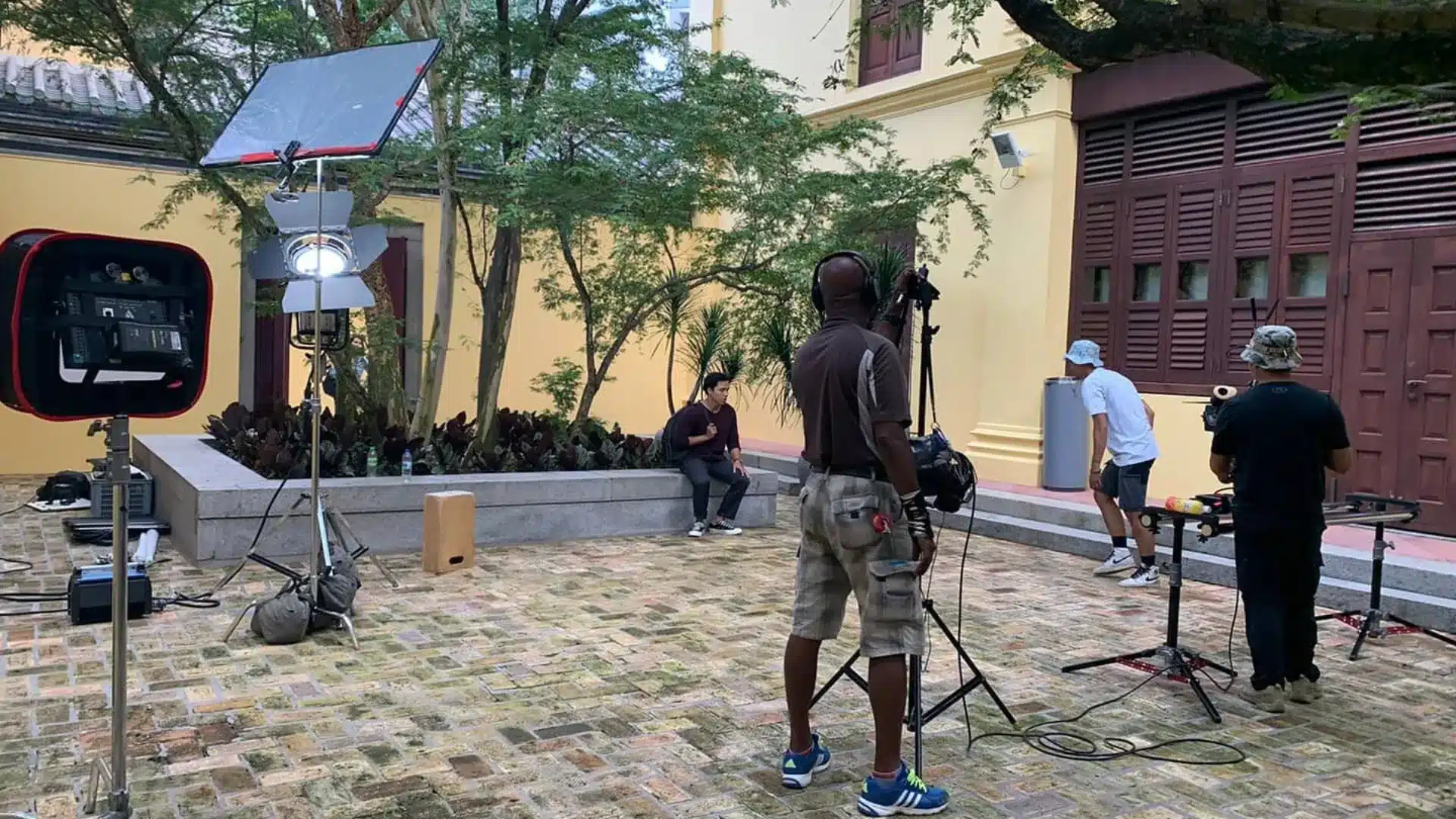
Short answer: Yes, in most professional scenarios. If you are planning commercial, corporate,…
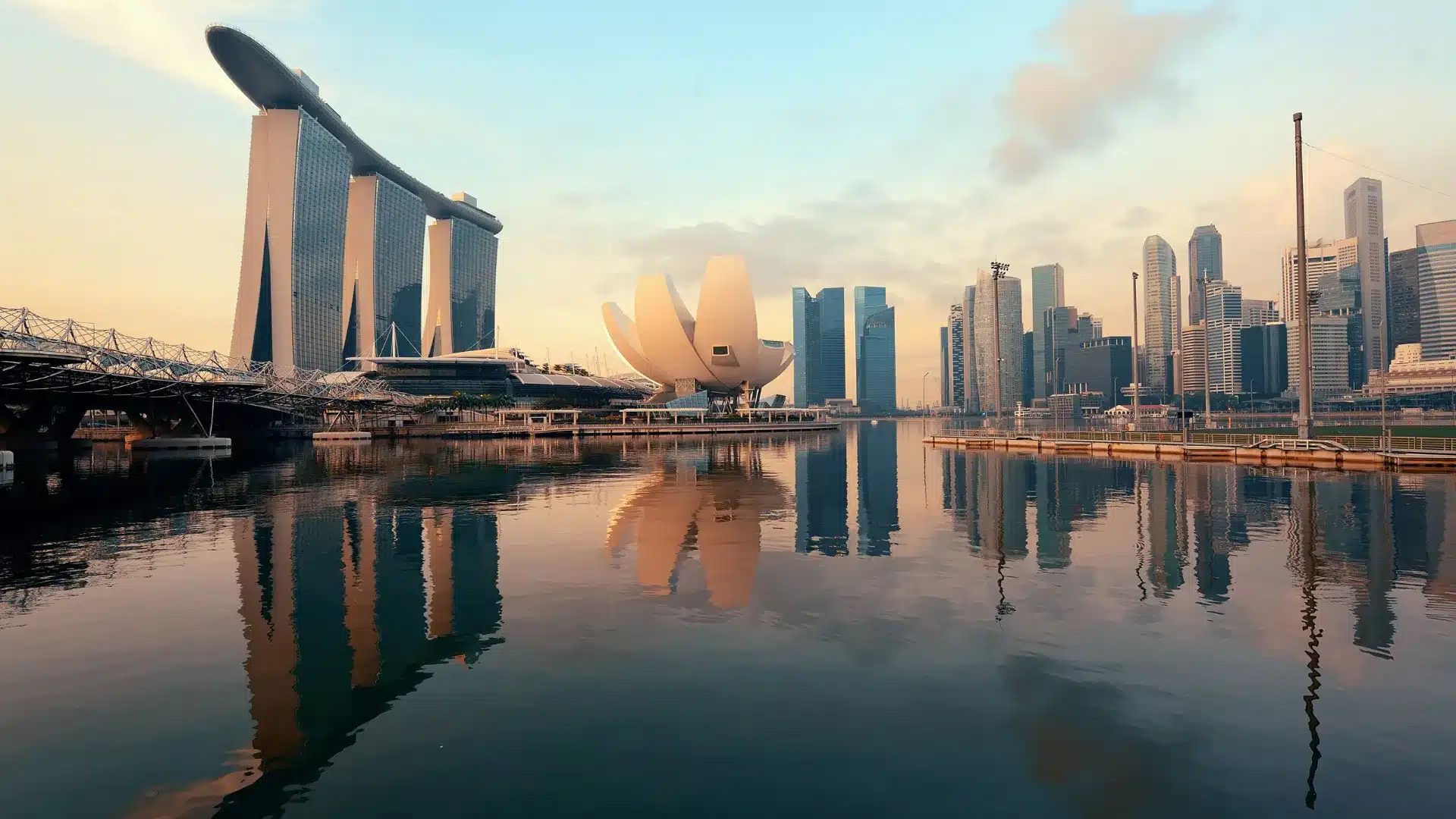
Singapore has emerged as one of Asia’s most effective and reliable stand-in destinations…
Hoodlum offers expert film fixer services in Singapore, supporting international productions across one of Southeast Asia’s most efficient, modern and visually striking filming destinations.
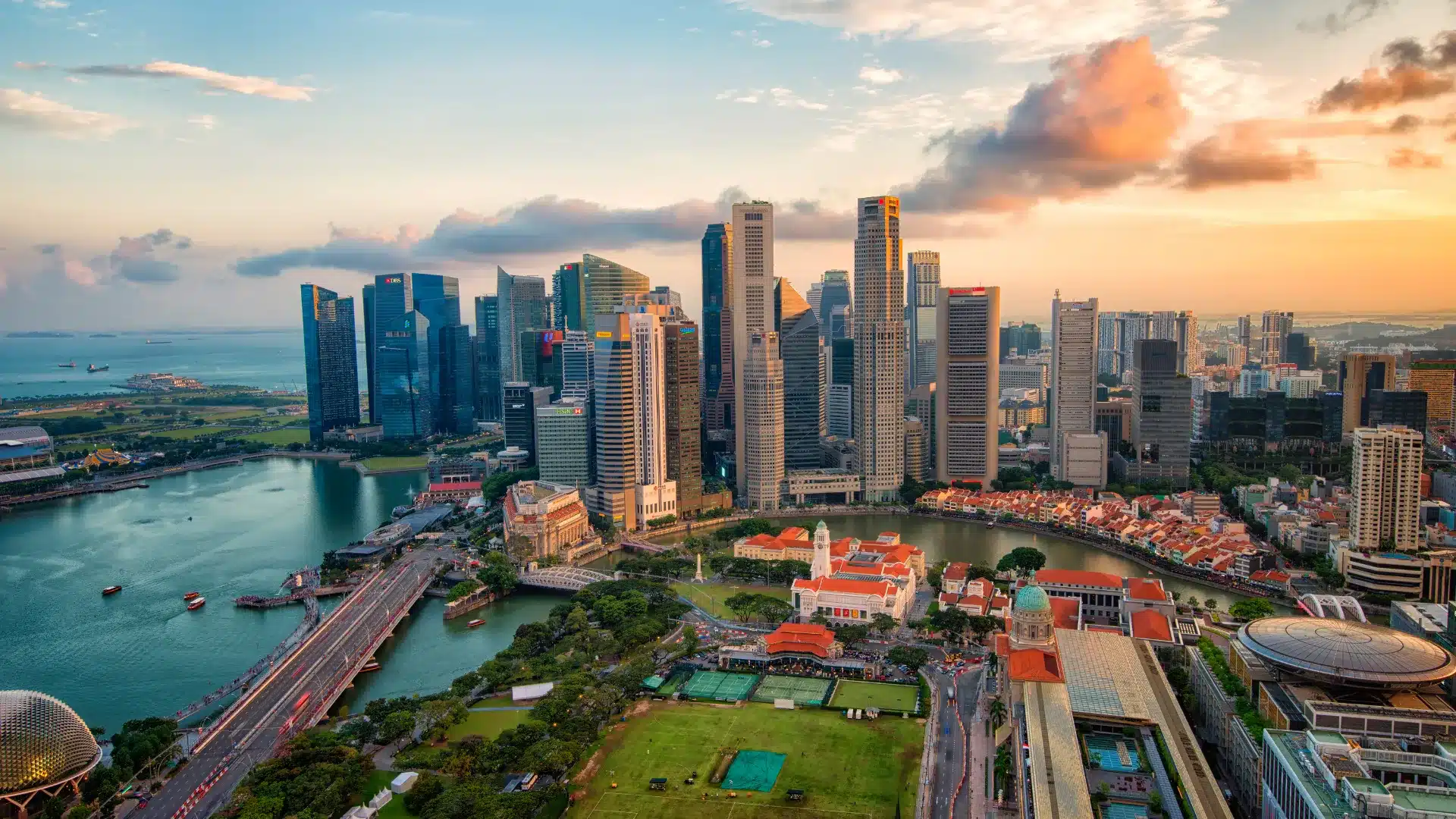
Singapore is a city-state of extraordinary visual concentration — the futuristic skyline of Marina Bay Sands and the Singapore Flyer, the biodome architecture of Gardens by the Bay, the colonial heritage of the Civic District and Chinatown, the colourful shophouses of Katong and Tiong Bahru, the lush rainforest canopy walks of MacRitchie and the Southern Ridges, the colonial black-and-white bungalows, and the resort island environment of Sentosa. Within a compact geography, Singapore offers a combination of modern architecture, tropical greenery and multicultural heritage that gives productions an extraordinary range of visual environments within minimal travel distances.
Singapore is renowned for its production efficiency. Customs clearance under the ATA Carnet system typically takes less than 24 hours. Film permit and crew accreditation are combined into a single FIVA (Foreign Individual Visitor Authorisation) process. The country is consistently ranked among the safest in the world. For productions that need a clean, modern, multicultural Asian environment with minimal bureaucratic friction, Singapore is one of the most efficient filming destinations anywhere in the region.
Singapore is a Southeast Asian filming destination that works for productions requiring a modern, efficient, multicultural urban environment with world-class infrastructure and minimal logistical friction. The country is served by Singapore Changi Airport, consistently rated among the world’s best, with excellent connectivity throughout Asia and globally.
The main production environments include the Marina Bay precinct with its iconic skyline, Gardens by the Bay’s biodome architecture, the Civic District’s colonial heritage buildings, the multicultural heritage districts of Chinatown, Little India and Kampong Glam, the shophouse streets of Katong and Tiong Bahru, the rainforest environments of MacRitchie Reservoir and the Southern Ridges, the resort island of Sentosa, and the industrial and port environments of the western region.
A successful Singapore production benefits from the country’s streamlined approval framework. The FIVA process combines film permit and crew accreditation. Small-scale B-roll filming may not require a permit at all unless public landmarks or space closures are involved. CAAS drone permits are not required for drones under 7kg flown below 60 metres away from airports. ATA Carnet customs clearance typically takes under 24 hours.
Singapore works for productions that need a clean, modern, efficient Asian production base with minimal bureaucratic friction, world-class infrastructure, multicultural heritage environments and some of the best safety and logistics standards in the world.
Strong production use cases include:
Singapore’s position as a global business hub means productions can often combine Singapore location days with broader Southeast Asia regional shoots, using Changi Airport’s connectivity as a base for multi-country logistics.
English as an official language and the primary language of business and government removes virtually all communication friction with permit authorities, location managers and production partners.
Singapore’s tropical rainforest climate is consistent year-round — warm, humid and without distinct seasons. There is no single “best” season in the way that applies to most other destinations in this guide.
Rainfall occurs throughout the year, typically as short, intense showers rather than prolonged wet periods. The monsoon season from November to January tends to bring the wettest conditions, with more frequent and sometimes heavier rainfall.
Productions should plan for:
For most productions, Singapore’s climate consistency is an advantage — there is no narrow seasonal window that must be hit, and schedule flexibility is rarely constrained by weather in the way it is in destinations with pronounced dry and wet seasons.
Most travellers need to apply for an e-visa before entering Singapore. The process is efficient and accessible.
Required documentation:
Processing time: Seven to ten working days, up to two weeks depending on application volume.
Estimated cost:
Visa application: Singapore Immigration & Checkpoints Authority (ICA).
Work authorisation for paid professional filming is addressed through the FIVA accreditation process below, which covers work permits and visas for skilled professionals together with crew listed in detail on the permit.
Film crew accreditation and film permits are combined in Singapore through the FIVA (Foreign Individual Visitor Authorisation) process. Work permits and visas for skilled professionals are handled together, with crew members listed in detail on the permit. Accreditation is mandatory for all foreign crew members.
Required documentation:
Processing time: Approximately two weeks.
Estimated cost: Bundled with film permit costs (see below).
This combined approach is one of Singapore’s most significant production efficiencies — rather than managing separate visa, work permit and accreditation processes, the FIVA framework consolidates crew documentation into a single coordinated submission alongside the film permit.
Film permits in Singapore are issued based on the project’s scale and location. Small-scale projects — such as B-roll filming or simple interviews — may not require a permit at all, unless they involve public landmarks or spaces. For larger projects, particularly those requiring public space closures, permits must be obtained from local authorities.
Required documentation:
Processing time: Two weeks to one month, depending on complexity and location.
Estimated cost by production scale:
This scale-based cost structure means that accurate classification of the production at the outset has direct budget implications. Hoodlum advises on the correct classification and manages the application accordingly.
Marina Bay filming locations — the Marina Bay Sands integrated resort, the Singapore Flyer, the Esplanade and the Marina Bay waterfront promenade give productions Singapore’s most globally recognisable skyline. The Merlion Park viewpoint provides the classic skyline composition. Public space filming requires permit consideration given the area’s landmark status and visitor volumes.
Gardens by the Bay — the Supertree Grove and the Flower Dome and Cloud Forest biodomes give productions a futuristic botanical environment unlike anywhere else in the world. Specific venue agreements apply in addition to general permit requirements.
Civic District — the colonial-era buildings of the former Parliament House, the Old Supreme Court (now National Gallery Singapore), Victoria Theatre and the Padang give productions colonial heritage architecture within walking distance of the modern skyline.
Chinatown, Little India and Kampong Glam — Singapore’s ethnic heritage districts give productions multicultural streetscapes, temples, mosques and shophouse architecture reflecting the country’s Chinese, Indian and Malay communities. Local authority coordination for street-level filming.
Tiong Bahru and Katong — pre-war shophouse and Peranakan architecture districts offering a quieter, more residential heritage character distinct from the central heritage districts.
Sentosa filming location — a resort island connected to mainland Singapore by causeway and cable car, offering beach, resort and entertainment environments including Universal Studios Singapore and S.E.A. Aquarium. Specific venue agreements and Sentosa Development Corporation coordination apply.
MacRitchie Reservoir and the Southern Ridges — rainforest canopy walks, reservoir environments and elevated walkways give productions a green, natural environment within a short distance of the urban core — useful for productions wanting both modern city and tropical nature within a compact schedule.
Flying a drone in Singapore is legal, with a notably permissive baseline. Permits are not required for drones weighing less than 7 kilograms flown below 60 metres and away from airports.
Permits become mandatory for drones heavier than 7kg, or for any drone flown above 60 metres or near airports.
Required documentation (where permit required):
Issuing authority: Civil Aviation Authority of Singapore (CAAS).
Processing time: Two to three weeks.
Estimated cost:
For productions using lightweight drones (under 7kg) at standard altitudes away from airports, Singapore’s drone framework is among the most permissive in the region — no permit required at all. For productions with heavier equipment or aerial work near Marina Bay, Changi Airport or other restricted zones, CAAS approval should be initiated well in advance given the two-to-three-week timeline.
Singapore is an ATA Carnet country, which significantly simplifies the import of professional filming equipment.
Required documentation:
Issuing authority: Singapore Customs, at the airport.
Processing time: Typically less than 24 hours — one of the fastest clearance timelines in this entire guide.
Important note: Customs duties are exempt on most goods, with the exception of certain types of alcohol. All goods are subject to 8% GST (Goods and Services Tax).
The under-24-hour clearance timeline reflects Singapore’s broader reputation for administrative efficiency. Complete Carnet documentation with serial numbers ensures this fast timeline is achieved without complications.
Singapore is ranked among the safest countries globally. General on-site security is recommended for film productions as standard practice rather than as a response to specific risk factors.
Key safety and security considerations:
Singapore offers film incentive information through Hoodlum. Productions should confirm current incentive availability, eligibility criteria and application processes with Hoodlum before budgeting.
Singapore’s primary production advantages are efficiency, infrastructure quality, safety and a multicultural visual environment within a highly compact geography — rather than a low-cost production base. Productions should budget for Singapore as a premium efficient destination rather than a low-cost alternative.
E-visa, FIVA accreditation (combined with film permit), CAAS drone permit where applicable, ATA Carnet customs clearance and venue-specific agreements (Marina Bay Sands, Gardens by the Bay, Sentosa) are the main approval streams.
A complete production plan connects:
For small-scale B-roll work without public landmark involvement, the process can be remarkably light — potentially no permit required at all. For larger productions, the FIVA and permit process should be initiated as early as possible given the up-to-one-month timeline at the top end.
Singapore is the right choice when a production needs a modern, efficient, safe and multicultural Asian urban environment — futuristic skyline, colonial heritage, tropical greenery and resort island environments within a compact geography with world-class infrastructure.
It is especially suitable for:
It may be less suitable for productions seeking a low-cost production base, requiring large-scale rural or wilderness environments, or needing visual scale that exceeds Singapore’s compact geography.
Avoid:
Support may include:
Do international film crews need a visa to film in Singapore?
Most travellers need an e-visa before entering. Processing takes seven to ten working days (up to two weeks). Costs range from SGD 30 for single-entry to USD 91.99 for the 30-minute online visa. Work authorisation for professional filming is handled through the FIVA accreditation process, which is combined with the film permit.
How does the film permit process work in Singapore?
Permits depend on production scale and location. Small-scale B-roll without public landmark involvement may not need a permit at all. Larger productions requiring public space closures need permits from local authorities, processed in two weeks to one month. Costs: USD 2,500 (small), USD 4,000 (medium), USD 8,500 (large).
What is the FIVA letter?
FIVA (Foreign Individual Visitor Authorisation) combines film crew accreditation with the film permit. Work permits and visas for skilled professionals are handled together, with crew listed in detail. Mandatory for all foreign crew. Processing: approximately two weeks. Cost is bundled with the film permit.
Can productions use drones in Singapore?
Yes, and Singapore has one of the region’s more permissive frameworks. No permit required for drones under 7kg flown below 60 metres away from airports. Permits are mandatory for heavier drones or operations above 60m or near airports — CAAS processing takes two to three weeks. Cost: USD 600 for one drone model, USD 400 for each additional model.
Is Singapore a Carnet country?
Yes — Singapore is an ATA Carnet country. Customs clearance typically takes less than 24 hours, one of the fastest in the region. Customs duties are exempt on most goods except certain alcohol. All goods are subject to 8% GST.
What is the best time of year to film in Singapore?
Singapore’s tropical climate is consistent year-round with no distinct seasons. Short daily rain showers should be planned for regardless of timing. November to January tends to bring the wettest conditions if scheduling flexibility allows avoiding this window, but it is not a binding constraint.
Does Singapore offer film incentives?
Singapore offers film incentive information through Hoodlum. Confirm current availability and eligibility criteria before budgeting. Singapore’s primary advantages are efficiency, infrastructure and safety rather than low cost — budget accordingly.
Singapore Immigration & Checkpoints Authority (ICA)
Civil Aviation Authority of Singapore (CAAS)
This region is defined by efficiency — and understanding where that efficiency applies, and where production scale and venue status change the picture, is the key to planning a shoot here correctly.
The FIVA process combines crew accreditation, work permits and visas for skilled professionals with the film permit into a single coordinated process — a level of consolidation that few other destinations in this guide can match. ATA Carnet customs clearance typically takes under 24 hours. Lightweight drone operations under 7kg require no permit at all. For small-scale B-roll work without public landmark involvement, no permit may be required whatsoever.
At the same time, production scale classification has direct and significant cost implications — USD 2,500 for small productions versus USD 8,500 for large-scale work. Landmark venues including Marina Bay Sands, Gardens by the Bay and Sentosa require their own agreements beyond the general permit framework. Understanding which category a production falls into, and which venues need additional coordination, is the foundation of accurate budgeting and planning.
The local film permit process is unusual among Southeast Asian destinations in that the permit requirement itself is scale-dependent. Small-scale B-roll work — interviews, simple testimonials — may not require a permit at all, unless public landmarks or spaces are involved.
For productions that do require one, the cost structure is tiered by scale: USD 2,500 for small projects such as interviews and testimonials, USD 4,000 for medium-scale work such as company profiles and factory tours, and USD 8,500 for large-scale productions including brand stories, events and live broadcasts. Processing takes two weeks to one month depending on complexity and location.
Required documentation — shoot synopsis, production company profile, crew passport scans and equipment list — is consistent across scales, but the cost and timeline differ significantly. Productions should confirm their classification with Hoodlum at the earliest planning stage, since misclassification has direct budget consequences.
The filming visa Singapore process begins with an e-visa through the Immigration & Checkpoints Authority. Most travellers require this before entering. Processing takes seven to ten working days, up to two weeks depending on volume, though an online option can be processed within 30 minutes.
Costs vary by visa type: SGD 30 for single-entry, SGD 90 for multiple journey, SGD 40 for short-term visit pass extension, and USD 91.99 for the 30-minute online option.
What makes the process distinctive is the FIVA letter — the Foreign Individual Visitor Authorisation that combines crew accreditation with work permits and visas for skilled professionals, all integrated with the film permit application. Rather than three separate government relationships, FIVA consolidates crew documentation into one coordinated submission. Required documentation includes production company profile, script, passport scans and photos of all crew, visa scans and equipment list with serial numbers. Processing takes approximately two weeks, with costs bundled into the film permit.
The FIVA letter Singapore filming process is mandatory for all foreign crew members and represents one of the more consolidated accreditation frameworks of any destination in this guide.
Where many countries require separate applications for entry visas, work permits and production accreditation — each with its own authority, documentation and timeline — this region’s FIVA process integrates all of these with the film permit itself. Crew members are listed in detail directly on the permit application, removing the need for individual downstream work authorisation processes.
This consolidation is one of the practical reasons the city-state functions as an efficient regional base for productions combining a local shoot with broader Southeast Asia logistics — the crew documentation overhead for this leg is proportionally lower than for most neighbouring destinations.
Marina Bay filming locations give productions one of the most internationally recognisable visual signatures anywhere in Asia — the Marina Bay Sands integrated resort with its iconic SkyPark, the Singapore Flyer, the Esplanade’s distinctive durian-shaped roof, and the Merlion Park viewpoint that frames the classic skyline composition.
Professional filming at Marina Bay Sands, Gardens by the Bay’s Supertree Grove and biodomes, and Sentosa’s resort environments requires venue-specific agreements in addition to the general FIVA/permit framework. These are privately managed properties with their own access conditions, fees and scheduling requirements that run alongside — not instead of — the government permit process.
Productions planning sequences at any of these landmark venues should initiate venue-specific agreement discussions at the same time as the general permit application, since each venue’s own scheduling and approval process can influence the overall timeline independently of the FIVA framework.
The CAAS drone permit Singapore framework is built around two clear thresholds: drone weight and flight altitude. Drones under 7 kilograms flown below 60 metres and away from airports require no permit at all — one of the more permissive baseline drone frameworks in Southeast Asia.
Once either threshold is crossed — a drone over 7kg, or any drone flown above 60 metres, or operations near airports — CAAS permit requirements apply. Required documentation includes company letterhead with operation area details, drone make and serial number, and operator licence. Processing takes two to three weeks. Cost: USD 600 for one drone model, USD 400 for each additional model.
For productions using standard lightweight drones for typical b-roll and establishing shots away from Changi Airport and other restricted zones, this step may not apply at all — a significant efficiency compared to destinations where all drone operations require advance permitting regardless of equipment specifications.
Singapore customs clearance ATA Carnet processing is among the fastest of any destination in this guide — typically under 24 hours with complete documentation.
The ATA Carnet, with detailed equipment lists and serial numbers, is presented at customs on arrival. Duties are exempt on most goods except certain types of alcohol — a notably broad exemption by regional standards. However, all goods are subject to 8% GST, which should be factored into equipment budgeting regardless of the duty exemption.
The speed of this clearance process reflects the country’s broader reputation for administrative efficiency, and is one of the practical reasons it works well as a logistics hub for productions moving equipment on to other Southeast Asian destinations.
Location scouting here benefits from a genuinely compact geography — the modern skyline, colonial heritage districts, multicultural neighbourhoods, tropical rainforest environments and resort island settings are all within a short drive of each other, in many cases within the same half-day.
The Civic District’s colonial architecture sits within walking distance of Marina Bay’s futuristic skyline. Chinatown, Little India and Kampong Glam offer distinct multicultural heritage environments within a compact central area. MacRitchie Reservoir’s rainforest canopy walks and the Southern Ridges provide tropical greenery a short distance from the urban core. Sentosa’s resort environment is connected by causeway and cable car.
This concentration means a genuinely diverse shot list — modern, colonial, multicultural, tropical and resort environments — is achievable within a production schedule that would require significantly more travel time and logistics almost anywhere else in this guide.
Singapore commercial production has a particular strength in corporate and brand content given the country’s status as a regional business hub. The medium-scale permit category — covering company profiles and factory tours at USD 4,000 — reflects how frequently this production type is requested.
The combination of modern architecture, multicultural workforce visibility, English-language efficiency and proximity to major Asian markets makes this a natural choice for technology, finance, luxury and lifestyle brand campaigns that want a contemporary Asian setting without the logistical complexity of larger or less developed destinations.
For brand content combined with broader regional campaigns, the FIVA framework’s efficiency and the under-24-hour customs clearance make this a practical staging point for crews and equipment moving on to other Southeast Asian shoot locations.
A Singapore film fixer confirms production scale classification early given its direct cost implications, determines whether the no-permit B-roll category applies before assuming the full FIVA process is required, manages the combined FIVA accreditation and film permit application, coordinates venue-specific agreements for Marina Bay Sands, Gardens by the Bay and Sentosa, confirms drone specifications against the 7kg/60m CAAS thresholds, prepares ATA Carnet documentation for under-24-hour customs clearance, sources local crew and equipment, and conducts location scouting that takes advantage of the country’s compact and visually diverse geography.
Film production here works most efficiently when Hoodlum is engaged early enough to confirm scale classification and venue requirements before the shoot plan is finalised — for larger productions, allow up to one month for the FIVA and permit process.
Hoodlum provides full production support for international crews across all Singapore filming locations — from early research and location scouting through FIVA letter Singapore filming coordination, Marina Bay filming locations and venue agreements, CAAS drone permit Singapore guidance, Singapore customs clearance ATA Carnet preparation and on-the-ground production management. For enquiries, visit hoodlum.tv/contact-us.
For productions building a Southeast Asia film production guide — comparing this destination with Malaysia, Thailand, Indonesia and Vietnam — Singapore occupies a position defined by efficiency and consolidation rather than scale or low cost.
It is the only destination in the region where crew accreditation, work permits and visas for skilled professionals are combined into a single FIVA process alongside the film permit, where customs clearance is reliably under 24 hours, where lightweight drone operations require no permit at all, and where small-scale B-roll work may require no permit whatsoever. It is also the only country in this guide where production cost is explicitly scale-tiered with transparent published figures.
Productions that have worked in Malaysia, Indonesia or the Philippines — each with more layered, multi-authority or location-dependent permitting structures — will find this framework comparatively simple to navigate, provided the production scale is correctly classified from the outset and venue-specific requirements for landmark locations are identified early.
The practical groundwork is always the same: confirm production scale classification first, check whether the no-permit B-roll category applies, initiate the FIVA process early for larger productions, confirm drone specifications against CAAS thresholds, prepare ATA Carnet documentation for fast customs clearance, initiate venue-specific agreements for landmark locations alongside the general permit, and engage Hoodlum’s local film fixer team to take full advantage of this region’s compact geography and efficient regulatory framework.
